The "General Heston Model" is:
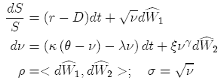
Using X1 = S, and X2 = ν, the previous equation can be transformed to a vector with independent noise sources:

to obtain the corresponding general form:
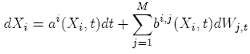
where:
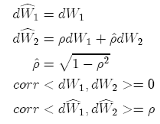
Using the definition for the Milstein scheme, the approximation of X has the following form:
 (52)
(52)
f or i = 1, ..., N ; j = 1, ..., M
where:
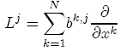
Substituting:
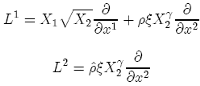
Then:
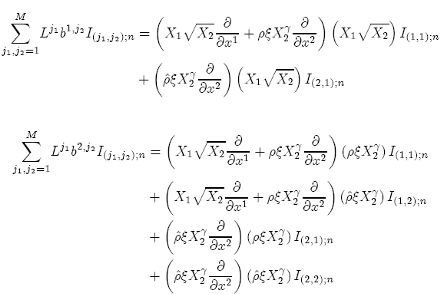
Calculating the respective derivatives, we get:
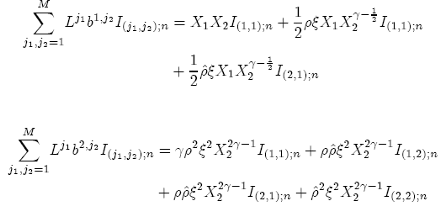
The double integrals have the following properties:

Substituting the previous properties, we get:
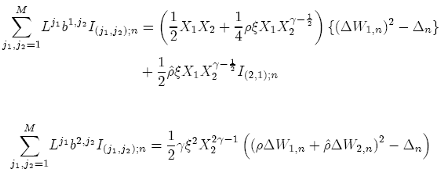
Substituting the previous results in {52}, we get:

Finally, returning to the original variables and the correlated noise, we get:
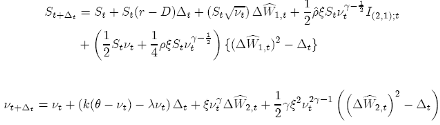
where:

Prof. Klaus Schmitz
Next: Numerical Data of the Double Integral
Summary: Index