The Elliott Wave
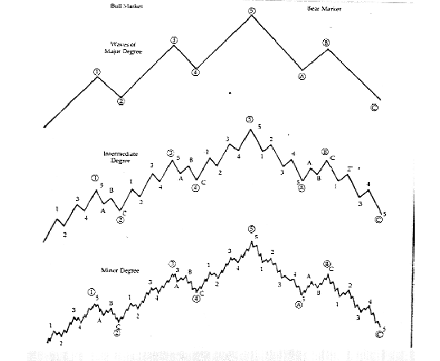
The Dow Theory

Determinants of Success at Technical Analysis
If you decide to use a charting pattern or technical indicator, you need to be aware of the investor behavior that gives rise to its success. You can modify or abandon the indicator if the underlying behavior changes.
It is important that you back-test your indicator to ensure that it delivers the returns that are promised. In running these tests, you should pay particular attention to the volatility in performance over time and how sensitive the returns are to holding periods.
The excess returns on many of the strategies that we described in this chapter seem to depend upon timely trading. In other words, to succeed at some of these strategies, you may need to monitor prices continuously, looking for the patterns that would trigger trading.
Building on the theme of time horizons, success at charting can be very sensitive to how long you hold an investment.
The strategies that come from technical indicators are generally short-term strategies that require frequent and timely trading. Not surprisingly, these strategies also generate large trading costs that can very quickly eat into any excess returns you may have.
Prof. Aswath Damodaran
Next: Books: Charting and Technical Analysis
Summary: Index