Let us deal with the concept of filtering waves discussed earlier. A filter normally eliminates all price movement that is not significant enough to impact on the analysis of the waves. How do we know that we are not missing a critical wave that could change the count of our pattern?
To evaluate properly, we must first have a visual representation of all possible waves; we then apply our filtered wave count on the same chart. Looking at the chart, we can see that our wave numbers correspond to major peaks and troughs of the red AO ZZ indicator. This indicator will plot the peaks and troughs using the following Elliott rules:
1 today's high is higher than yesterday or the low is lower than yesterday's low
2 if today is an inside day, use previous day
3 if today is an outside day, use high if previous was high or low if previous was low
4 if today's high is equal to yesterday high, use high
These rules incorporate inside and outside days, they will plot Elliott's definition of a wave. Experience has shown that inside days, when the high to low range is included in yesterday's range, are not indicative of the trend direction (when filtering waves). Ignoring these days will give better signals and eliminate whipsaws.
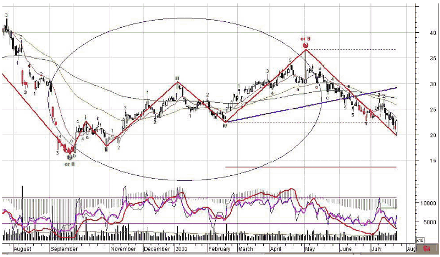
Fig 10
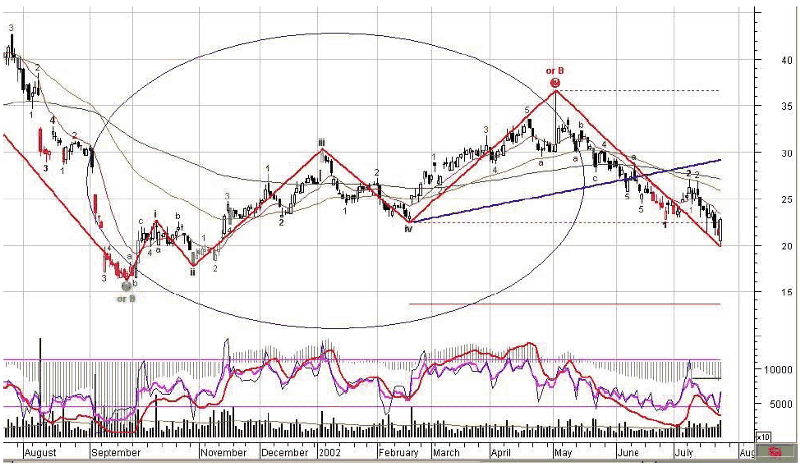
We observe that all major peaks and troughs are captured by the filter since we see the wave numbers at the major turn points. Could the price move in between the filtered and numbered waves change our count for the pattern? If we look at the patterns within each filtered wave, we can see that Elliott patterns of 3 and 5 are present; this is what we would expect otherwise the filter would cut through the pattern leaving us with an incoherent count.
As an example, just take a look at the blue ellipse that shows a nice 5 wave pattern. Sometimes a wave will have 7 or 9 legs which cannot form a combination of 3 and 5; the extra leg is an extension of the wave due to the volatility acceleration, where an x wave appears in the count. In conclusion, we can safely assume that the filter does not miss a wave; it will filter out the lesser degree wave patterns. The red zigzag line is the indicator AO ZZ and can be adjusted for the desired sensitivity.
Next: Screen Layouts
Summary: Index